Online job scams in Africa: how to spot them and protect yourself
The biggest warning signs of online job scams in Africa are requests for upfront payments, account top-ups, or secret codes—not simply being paid for online work. Learn how recruitment scams operate, protect your mobile money account, and find the right reporting channel in your country.

Online job scams in Africa can start with an offer that looks convincing: clear instructions, a responsive contact, and a polished account dashboard. The turning point comes later. You supposedly need an activation payment, another deposit, or a security code to receive your money. When that happens, the pressure to act quickly should not replace independent checks.
Being paid for online work is not, by itself, evidence of fraud. What matters is the arrangement imposed on you. This guide separates fake recruitment, account top-up scams, disguised investments, and mobile money account theft. For the broader picture, explore our guide to online work in Africa, including payment options and practical limitations.
- African countries surveyed
- 36
- Survey used for INTERPOL's report.
- Countries reporting scam centers
- 72%
- Among countries surveyed by INTERPOL, not among individual residents.
- Suspects identified
- 263
- Jackal IV operation; this is not the arrest count.
- Reported fraud cases in Ghana
- 24,778
- During 2025 across banks, specialized deposit-taking institutions, and payment service providers.
These figures do not tell you your personal likelihood of being scammed. They also cannot identify whether a particular vacancy is genuine. Their practical value is context: fraud can involve recruitment, financial services, identity, and communications. Your decision about an offer should still rest on its verifiable terms and the requests made to you—not on a headline statistic.
What are the warning signs of online job scams in Africa?
The clearest warning is a request for your money before you can receive your supposed earnings. The explanation might involve verification, a tax, an account upgrade, or correcting a balance. Different labels can conceal the same mechanism: you must send personal funds before the promised payment becomes available. Pause at that request, regardless of how professional everything looked beforehand.
Other warning signs include recruitment without a meaningful discussion, persistent urgency, withdrawal rules that keep changing, and vague answers about who runs the service. An active group or payment screenshots cannot resolve those questions. They show what someone wants you to see, not necessarily who controls the money or whether you can withdraw under the stated conditions.
Ask a practical question: can you verify the organization, its terms, and its support channel without relying on the recruiter? If not, suspend the application rather than filling the gaps with reassurance. Our guide to legitimate work-from-home opportunities and common scams offers another way to assess whether an offer has an identifiable professional structure.
- Warning sign:You must pay to obtain the job or activate your earnings.
- Warning sign:A personal account top-up is required before you can withdraw.
- Warning sign:The recruiter refuses contact through the organization's official details.
- Warning sign:The website address differs from the independently located official domain.
- Warning sign:Someone requests your PIN, password, or a code received by SMS.
- Warning sign:You are pressured to move work outside the platform through WhatsApp or Telegram.
- Warning sign:Your compensation depends mainly on deposits or recruiting new participants.
- Warning sign:You are rushed into paying before you can read the terms.
Should you pay registration, training, or activation fees?
Cybermalveillance.gouv.fr advises against paying a prospective employer any money, regardless of the explanation. Registration, application processing, and equipment purchases arranged by the recruiter should not turn a job application into a request for funds. Before considering the label attached to a fee, establish who receives it and why.
An independent course you freely choose is different from training imposed as a condition of being hired. Assess the seller, the course content, and whether you can decline it. If the supposed employer requires payment to their account before confirming your position, calling it training does not remove the underlying problem. Evaluate the course separately from the job.
Transparent contractual fees also differ from an advance deposit. A service may disclose transfer charges deducted from an actual withdrawal. That does not justify a separate top-up to release a displayed balance. Read where the charge appears, how it is calculated, and whether you must send additional money outside the normal account process before receiving anything.
| Acceptable arrangement | Warning sign | Your next move | |
|---|---|---|---|
| Payment to an employer to get hired | Do not pay | ||
| Top-up to release earnings | Stop sending money | ||
| Secret code requested by message | Do not share it | ||
| Disclosed transfer fee deducted | Check the contract | Not sufficient alone | Read the terms |
| Identity check inside the official account | Possible | Not sufficient alone | Verify the website |
| Freely chosen independent training | Assess separately | Not sufficient alone | Evaluate the seller |
Sources: Cybermalveillance.gouv.fr, fake job offer guidance; FTC, task scam guidance; Microtaches account and payout rules. ✓/✗ describes the situation shown, not a certification of any service.
Why do task scams ask you to top up before withdrawing?
A task scam is a scheme that uses apparent work to draw you into funding a fake earnings process. Cybermalveillance.gouv.fr describes approaches through messages or WhatsApp and Telegram group invitations. The messaging app alone is not the deciding factor. The concern is the sequence linking proposed work, a displayed balance, and a required personal deposit.
The Federal Trade Commission, or FTC, reports that some victims receive small initial payments intended to build trust. Receiving that payment does not establish that later balances are real or withdrawable. Judge the full arrangement, especially what happens when you request a withdrawal, rather than treating an early transfer as proof.
FTC guidance describes the next stage: fictitious earnings accumulate, then a deposit becomes necessary to continue or withdraw. A hesitant person may be brought into a group where supposed experienced workers describe their success. That social reassurance diverts attention from the unanswered question: why must you send your own money to receive money supposedly already earned?
Do not top up to rescue money you have already sent. That reasoning can keep you inside the same trap. When a blocked withdrawal produces another deposit demand, stop paying and preserve the displayed balance, the explanation given, and the payment details. Those records matter more than trying another payment to see whether the next promise is different.
- Contact: an offer arrives through a message or group.
- Trust: a small initial payment may make the arrangement feel credible.
- Illusion: a counter shows earnings you cannot independently verify.
- Top-up: your own money becomes necessary to continue or withdraw.
- Block: another condition pushes the promised payment further away.
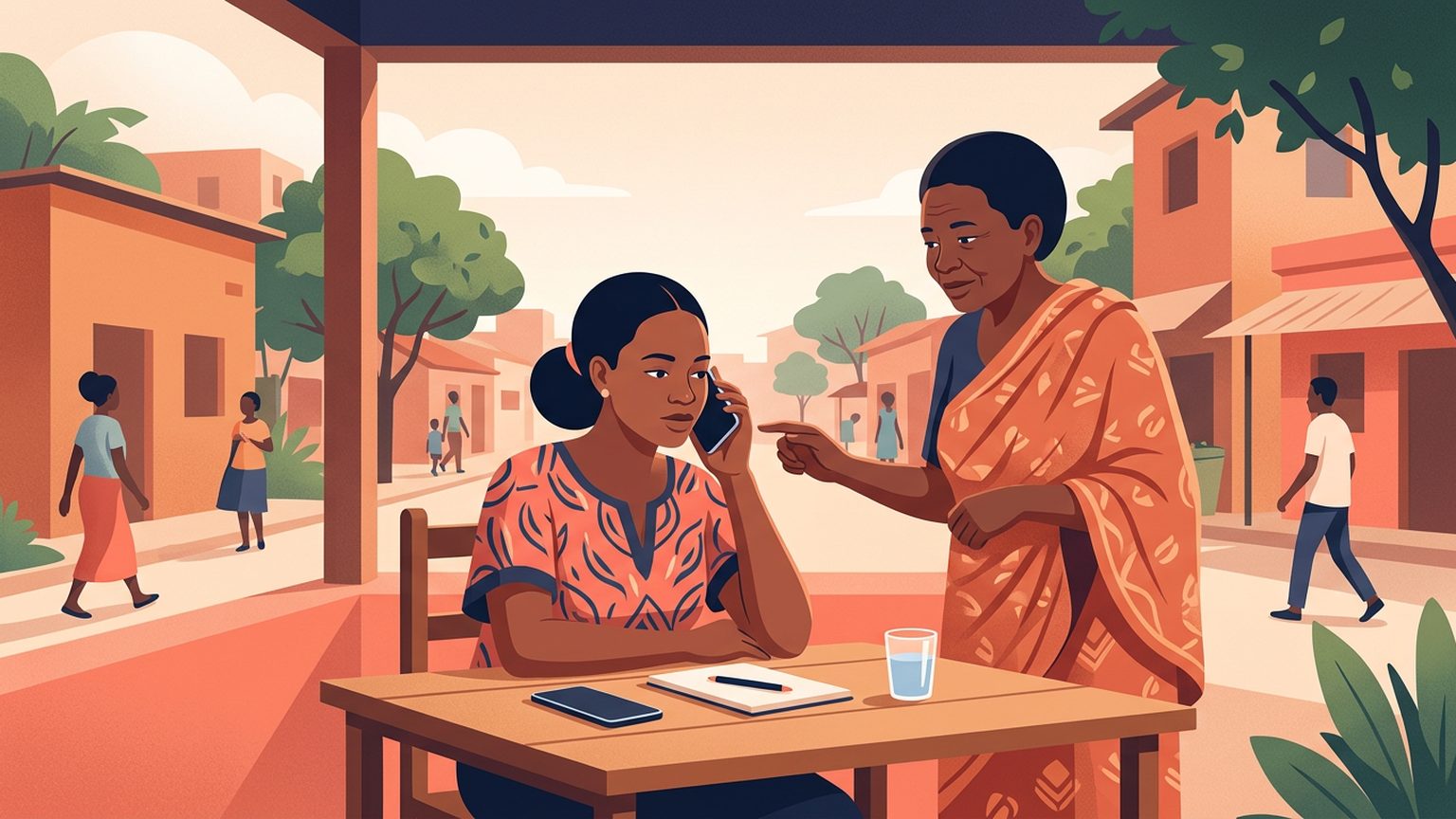
How can you verify a recruiter and spot a cloned website?
France Travail warns that fake vacancies can appear on legitimate employment websites. It also notes that fraudsters may copy a company logo and use an existing SIRET number, a French business registration identifier. A real organization can therefore be impersonated. Finding the company itself does not establish that the person contacting you represents it or that the vacancy exists.
Locate the organization independently of the recruiter's link. Find its official website, then its careers section or publicly listed contact. The FTC recommends this approach for offers received through Telegram. Ask the organization to confirm both the vacancy and the contact person's identity. A useful confirmation concerns your specific offer, not simply whether the organization is a real business.
A cloned website is a copy designed to imitate another service. Compare its complete address with the official domain, the website's core address, character by character. The French Ministry of Economy explains that an HTTPS padlock does not establish trustworthiness. HTTPS protects the connection; it does not verify the honesty of whoever operates the website.
Separate a structured identity check from premature document collection. Be cautious when an unverified recruiter immediately requests personal documents. A platform may instead provide a defined verification process inside your official account. Before uploading anything, check its stated purpose and review our guide to data security on online work platforms. Never let an attractive offer replace that assessment.
- Do not rely only on replying to the number that contacted you.
- Find the organization's official contact details yourself.
- Request confirmation of the specific offer and recruiter, not just the company's existence.
- Hold back documents and money while verification remains incomplete.
Are Ponzi schemes, recruitment pyramids, and MLMs the same?
A Ponzi scheme is not a job. Investor.gov, the US Securities and Exchange Commission's investor information service, explains that it pays existing investors using money collected from new investors. Apparent returns conceal the source of the funds. If an offer labeled as work mainly asks for capital and promises returns, examine it as an investment proposal instead.
A recruitment pyramid depends mainly on bringing in participants rather than selling products, according to the FTC. Ask where your compensation comes from. If the explanation revolves around your network's registrations and deposits, it is not ordinary payment for work performed. Early payouts do not answer that question; the funding mechanism is what you need to understand.
MLM means multilevel marketing, a sales model involving multiple levels of participants. It is not automatically a Ponzi scheme. The FTC distinguishes models that allow compensation through retail sales without requiring recruitment. That explains a mechanism, not whether a particular business is trustworthy. US guidance also does not automatically determine the law in an African country. Examine expenses and terms separately.
| Ponzi scheme | Recruitment pyramid | Non-pyramid MLM | |
|---|---|---|---|
| Main compensation source | New investments | Recruitment | Retail sales |
| Participant's role | Investor | Participant recruiter | Seller |
| Mandatory recruitment | Not essential to mechanism | Central to mechanism | |
| Question to ask | Where do returns come from? | Who funds commissions? | What do sales generate? |
| What to examine | Source of funds | Reliance on new entrants | Expenses and terms |
| Not sufficient proof of trust | An isolated payment | An enthusiastic group | An MLM label |
Sources: Investor.gov, Ponzi Scheme; FTC, Multi-Level Marketing Businesses and Pyramid Schemes. Comparison of mechanisms, not a general legal conclusion for African countries.
How do you protect mobile money and recognize a SIM swap?
A fake agent may claim to correct a transfer, validate a withdrawal, or protect your wallet. The Bank of Ghana states that a legitimate financial institution does not request your PIN, password, or OTP through calls or messages. A PIN is your personal secret code; an OTP is a temporary code, often delivered by SMS. Do not disclose these secrets to another person.
The number displayed during a call is not proof of identity either. The FTC's Office of Inspector General explains that caller identification can be falsified to impersonate a legitimate organization. For a call about your money, end the conversation and independently locate the provider's official contact. Simply calling back a number supplied in the message does not provide that independent check.
The GSMA's fraudulent SIM swap guidance describes transferring your phone number to a SIM controlled by a scammer, allowing interception of calls and temporary codes. Sudden, unexplained loss of mobile service is a warning sign. It is a reason to investigate promptly, not proof by itself that a swap occurred.
If you suspect a SIM swap, contact the operator immediately through another available means and request that the line be frozen, as the GSMA recommends. Notify the service holding your money as well. Our Orange Money, MTN MoMo, Wave, and MVola comparison helps with payout choices, but choosing a payment method never replaces protecting access to it.
- Keep your secret PIN and temporary codes private.
- Where supported, use an authenticator app, which generates codes for an extra login check. The GSMA recommends it rather than relying only on SMS for that extra check.
- Review wallet activity after an incident and preserve suspicious transaction references.
What do INTERPOL operations tell us about online fraud?
Serengeti, Red Card, Jackal, and HAECHI describe large investigations with different scopes. Some concern cybercrime in Africa; others address financial fraud globally. Their results are not a ranking of work platforms or a count of recruitment scams. Arrest figures also concern suspects and investigations, not convictions. Read the operation's scope alongside the number rather than comparing the bars as equivalent cases.
| arrests | |
|---|---|
| Serengeti III | 1,462 |
| Red Card 2.0 | 651 |
| Jackal IV | 58 |
Recovered amounts require the same care. INTERPOL reports funds, currencies, or assets recovered during these operations. Those amounts are neither total victim losses nor money necessarily returned to every affected person. A police recovery announcement cannot establish whether your particular transfer will be refunded. It is important context, but not a personal recovery commitment.
| USD millions | |
|---|---|
| HAECHI VI | $439 million |
| Serengeti III | > $105 million |
| Red Card 2.0 | > $4.3 million |
For your job search, the useful conclusion remains practical: verify before paying or sharing secrets. INTERPOL's enforcement results and the GSMA's phone-security advice address different parts of the problem. An incident can target your application, identity, money, or mobile line. Identify what is exposed so that your next action reaches the appropriate provider or authority.
What should you do immediately after an online job scam?
If you have already paid, focus on limiting the incident rather than sending a final deposit to persuade the recruiter. Contact the relevant operator or financial institution promptly and ask what protective measures remain available. A request to block or dispute a transfer is worth making, but no universal refund outcome or response deadline can be promised.
Preserve evidence before deleting or blocking conversations. Cameroon's CIRT recommends keeping screenshots, numbers, emails, links, and messages. Add transfer references and a straightforward timeline of what happened. Keep the original material where possible, alongside your summary. A clear record helps you explain the incident without relying on memory or repeatedly reopening the scammer's messages.
- 1Stop sending moneyStop
Refuse further top-ups, taxes, or activation payments. Do not continue paying to rescue amounts already sent.
- 2Contact the payment serviceMoney
Use official contact details. Provide the transfer reference and ask about blocking or disputing the payment.
- 3Secure your line and accountsAccess
For a suspected SIM swap, contact the operator immediately. Change exposed passwords from a trusted device.
- 4Save your evidenceRecords
Keep conversations, addresses, numbers, screenshots, and payment records. Put events in chronological order.
- 5Report through local channelsReport
Contact the relevant service in your country. Ask separately how to file a criminal complaint when reporting is not enough.
- 6Reject unsolicited paid recovery offersCaution
Do not pay someone who contacts you promising to recover the lost money in exchange for advance fees.
The FTC describes a follow-up scam in which someone promises to recover lost money but demands an advance fee. After a loss, that offer can feel reassuring. Return to independently identified official services instead. Do not give an unsolicited contact your complete evidence file, account access, or additional funds merely because they claim they can solve the problem.
Where can you report online job scams in Africa?
Distinguish protecting a payment, reporting an incident, and filing a criminal complaint. These actions can complement each other, but they are not interchangeable. An operator's fraud number or technical reporting form does not automatically replace a police complaint. Prepare your evidence and confirm current procedures before traveling, particularly when a published guide identifies a physical office.
| Organization | Contact or action | Purpose | |
|---|---|---|---|
| Côte d'Ivoire | PLCC | (+225) 27 22 48 97 77 | Report; complaint at DITT |
| Cameroon | CIRT-CM / ANTIC | 8202 | Incident contact |
| Senegal | National Police / PSIC | PSIC online form | Report, not a complaint |
| Ghana | Cyber Security Authority | 292, call or SMS | Incident reporting |
| Kenya | Safaricom | Forward to 333 | Fraudulent number or message |
| Madagascar | Local police or gendarmerie | Verify contact details | Ask how to file a complaint |
Sources: Côte d'Ivoire Ministry of Communication, official guide; CIRT-CM/ANTIC, Contact page; Senegal National Police, PSIC; Ghana CSA, Report page; Safaricom, Fraud Awareness. Details checked in November. Madagascar: specialized contact details must be verified with local authorities.
Côte d'Ivoire: contact the PLCC
The Côte d'Ivoire Ministry of Communication's guide lists (+225) 27 22 48 97 77 for the PLCC. For a complaint, it directs victims to the DITT in Cocody Danga, Rue B31, near the Spanish embassy. Our guide to online work in Côte d'Ivoire provides additional local context.
Cameroon: contact ANTIC's CIRT
The CIRT-CM Contact page, associated with ANTIC, publishes the toll-free number 8202. Have screenshots, links, contact details, and conversations ready. Explain whether the incident involves account compromise, an attempted fraud, or money already transferred. Ask which next step applies to your situation rather than assuming that an incident report completes every necessary procedure.
Senegal: an online report is not a criminal complaint
The Senegal National Police PSIC form states that submitting an online report does not constitute an official criminal complaint. For a complaint, it directs victims to the Division Spéciale de Lutte contre la Cybercriminalité at Corniche and Rue Malick SY, Médina, Dakar. Keep that distinction in mind when organizing your evidence and follow-up.
- Ghana: the Cyber Security Authority accepts incident reports by call or SMS to 292.
- Kenya: Safaricom asks users to forward a fraudulent number or message to 333. This is an operator reporting channel, not a general criminal complaint.
- Madagascar: verify specialized contact details with local authorities. Ask police or the gendarmerie about the complaint procedure; do not assume an administrative portal handles private job fraud.
Where does Microtaches fit, and how do withdrawals work?
Microtaches can be a complementary option for short tasks, not a salaried job or a solution for immediate payment needs. Task availability varies by day, country, and profile. Registration is free, and the team approves each account. Completing the profile questionnaire is mandatory and earns a 10-Ops bonus. Ops are Microtaches' earnings unit.
Responses undergo manual or automatic verification before Ops are credited; a rushed response may be rejected. An accepted task must be completed within 60 minutes, with no more than 3 tasks in progress. Expiration without a response deducts 20 Ops. You can abandon a task without penalty within 10 minutes. Consider these rules before accepting a mission.
For withdrawals, 1 Ops equals €0.0042, so 5,000 Ops equals €21. The minimum withdrawal is 5,000 Ops, with a non-withdrawable reserve of 10,000 Ops. Your balance must therefore reach 15,000 Ops for an initial 5,000-Ops withdrawal. The reserve is not a deposit you must pay. Identity verification becomes accessible at 1,000 Ops and requires ID plus proof of address before your first withdrawal or shop order.
Microtaches withdrawals: conditions to understand
Your Ops can be withdrawn to a bank account, a mobile money account or an online wallet. Bank transfer is available from the usual minimum; MVola, Orange Money, Wave, MTN MoMo, PayPal, Skrill and Neteller are available from 25,000 Ops; Revolut and Crypto are coming soon. In Workers in French-speaking Africa, mobile money is often the most convenient option.
| Type | Availability | Where it is used | |
|---|---|---|---|
| Bank transfer (IBAN) | Bank | Available from the usual minimum | Bank account with an IBAN, in Europe or elsewhere (fixed fee outside Europe) |
| MVola | Mobile money | Available from 25,000 Ops | Madagascar |
| Orange Money | Mobile money | Available from 25,000 Ops | Madagascar, Ivory Coast, Senegal, Cameroon, Mali, Burkina Faso, Guinea, DR Congo… |
| Wave | Mobile money | Available from 25,000 Ops | Senegal, Ivory Coast, Mali, Burkina Faso… |
| MTN MoMo | Mobile money | Available from 25,000 Ops | Ivory Coast, Cameroon, Benin, Guinea, Congo, Ghana… |
| PayPal | Online wallet | Available from 25,000 Ops | Countries where PayPal lets you receive money |
| Skrill | Online wallet | Available from 25,000 Ops | International online wallet |
| Neteller | Online wallet | Available from 25,000 Ops | International online wallet |
| Revolut | Neobank | Coming soon (no date yet) | Coming soon |
| Crypto | Cryptocurrency | Coming soon (no date yet) | Coming soon |
Methods shown on the Withdrawals page of your Microtaches account. Countries listed are examples where the service is common.
Bank transfers using an IBAN, a bank account identifier, are available from the minimum withdrawal threshold. Transfers outside Europe carry a fixed 800-Ops fee, equivalent to €3.36. MVola, Orange Money, Wave, MTN MoMo, PayPal, Skrill, and Neteller become available from 25,000 Ops; the reserve remains non-withdrawable. The receiving account must match your verified legal name. Revolut and Crypto are listed as coming soon, without a date.
Identity verification takes up to 7 business days. Withdrawal payment can take up to 3 weeks after request approval; shop orders can take up to 2 weeks. In the shop, 1,000 Ops provides €8.20 in gift card value, versus €4.20 when withdrawn. Gift card value is not withdrawable cash. Microtaches' internal withdrawal cap is €2,500 per worker annually. Read our identity verification guide before your first request.
Microtaches may suit short-task work if you understand Ops, the reserve, and payment timelines. Read the rules before starting rather than planning around a particular earnings amount or assumed task availability.
- Free registration without an activation deposit.
- Account approval and a required profile questionnaire.
- Explicit Ops conversion rates and withdrawal conditions.
- Structured identity verification before withdrawals or shop orders.
- Several withdrawal methods offered.
- Task availability varies by day, country, and profile.
- A 10,000-Ops reserve cannot be withdrawn.
- Some payment methods become available from 25,000 Ops.
- Payment can take up to 3 weeks after withdrawal approval.
- Responses may be rejected, and unanswered expired tasks incur a penalty.
What else should you know before accepting an online offer?
Questions often arise just before registration, document submission, or withdrawal. At each stage, separate something that feels reassuring from something you can actually verify. The answers below address those decision points.
You do not need to complete the process simply because you have already spent time on it. If a new condition changes the arrangement, pause and check it before proceeding.
- How can I tell whether an online job offer is fake?
- Look at what the applicant is asked to do: pay upfront, top up before withdrawing, share secret codes, or leave the expected working arrangement. Verify the vacancy and recruiter through independently located organizational contacts. A logo, business registration number, or listing on a familiar job website does not authenticate the person contacting you.
- Is it normal to pay registration or training fees before being hired?
- Cybermalveillance.gouv.fr advises against paying a prospective employer any money. Independently chosen training should be evaluated separately; it does not justify paying a recruiter to obtain a job. Transparent contractual service fees are also different from a personal deposit demanded before you can receive your supposed earnings. Check the recipient, purpose, and payment conditions.
- Why am I being asked to top up my account before withdrawing?
- This matches the task scam mechanism described by the FTC: fictitious earnings appear on screen, then a personal deposit becomes necessary to continue or withdraw. Do not top up to recover money already committed. Stop sending funds, preserve the displayed balance and conversations, and contact the payment service involved to ask what protective measures remain possible.
- Does a small first payment prove that a platform is trustworthy?
- No. The FTC reports that small initial payments can build trust in task scams. They do not establish that the next displayed balance is real or withdrawable. Examine the complete terms rather than relying on an early payout. Stop sending money if a personal top-up becomes necessary to receive the earnings shown.
- Are all job offers on WhatsApp or Telegram scams?
- The messaging channel alone is not enough to decide. Verify the organization, vacancy, and contact through official details found independently. Be especially cautious if someone demands that you move work outside the platform, pay an activation fee, or top up an account. The concrete request matters more than the messaging app's name.
- Does an HTTPS padlock mean a recruitment website is legitimate?
- No. The French Ministry of Economy explains that HTTPS does not prove a website is trustworthy. It protects the connection, but a fraudulent website can use it too. Compare the complete address with the official domain, locate an independent contact, and confirm the vacancy before sending personal documents or money.
- Is an MLM always a Ponzi scheme or recruitment pyramid?
- No. Investor.gov describes a Ponzi scheme as paying earlier investors with newer investors' money. The FTC distinguishes recruitment-centered pyramids from some MLMs that compensate retail sales without requiring recruitment. These distinctions do not certify a business. Examine the source of compensation, expenses, and applicable terms rather than relying on the MLM label.
- What should I do if my phone suddenly loses service?
- Unexplained loss of service can indicate a SIM swap, according to the GSMA, although other causes are possible. If you suspect fraud, immediately contact your operator through another available means and request that the line be frozen. Notify your payment service and review your accounts without sharing secret codes with anyone.
- How do I report to the PLCC or ANTIC, or file a complaint in Senegal?
- Côte d'Ivoire's ministerial guide lists (+225) 27 22 48 97 77 for the PLCC. Cameroon's ANTIC-associated CIRT publishes 8202. In Senegal, the PSIC online form is not a criminal complaint; it directs victims to the National Police's specialized division. Prepare evidence and payment references, then confirm the relevant procedures before proceeding.
- Should I pay someone who promises to recover money lost to a scam?
- Be wary of an unsolicited contact promising recovery in exchange for advance fees. The FTC describes this as a follow-up scam targeting people who have already lost money. Return to your payment provider's official contacts and the relevant authorities. Do not give a stranger account access, secret codes, or another deposit to supposedly rescue your funds.